April 13, 2026
Top 5 Questions Answered About Graywater Systems
By Kim Bliss
With the average person in the United States using up to 70 gallons of water every day and freshwater resources continuing to diminish, graywater systems are a smart plumbing option for homes to help lower environmental impacts and save thousands of gallons of potable water annually.
How Do Graywater Systems Work?
In a graywater system, water is captured from sinks and showers into a holding tank where it goes through a filtering process. Then, specially designated purple pipe—the industry standard color for reclaimed water systems—distributes the filtered, reclaimed water from the holding tank out to laundry, toilets and irrigation systems.
What’s the Cost of a Graywater System?
Costs vary depending on the home size and region. However, adding a dual potable and reclaimed water plumbing system into a home can add minimal and sometimes even less cost compared to a traditional potable-only plumbing system. For a quote, reach out to a reputable plumber trained in graywater system design and installation.
Can Installing a Graywater System Meet Green Building Standards?
Depending on the application, installing a graywater system can help a home earn LEED® or National Green Building Standard™ points. For complete details, refer to usgbc.org or nahb.org.
What Kind of Pipe is Used in a Graywater System?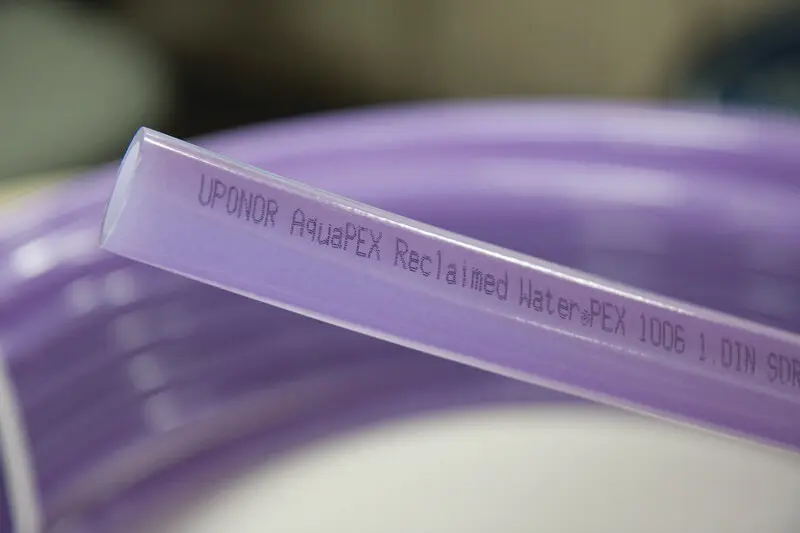
The best type of pipe to use in a graywater system is PEX due to its flexibility, durability, and corrosion resistance. Available in sizes from ½" to 2", Uponor AquaPEX® Reclaimed Water Pipe offers nearly two decades of service in graywater systems along with a 25-year transferable limited warranty when used as a system with Uponor ProPEX rings and fittings.
The best benefit of using Uponor AquaPEX Reclaimed Water Pipe for greywater systems is that plumbing professionals don’t have to switch products when installing potable plumbing and greywater systems. They can quickly and easily install an entire plumbing system with Uponor AquaPEX using the same tool, same fitting technology, and same ease of use without the need for torches, solvents, crimps, clamps, or gauges.
What are the Other Benefits of Graywater Systems?
In addition to potentially reducing household water consumption by up to 80% and lowering water utility bills, installing a graywater system can potentially downsize the water main entering the house, decrease the strain on septic systems, and provide a sustainable source for landscape irrigation.
To learn more about graywater systems, visit gba.org or greywateraction.org.
How Do Graywater Systems Work?
In a graywater system, water is captured from sinks and showers into a holding tank where it goes through a filtering process. Then, specially designated purple pipe—the industry standard color for reclaimed water systems—distributes the filtered, reclaimed water from the holding tank out to laundry, toilets and irrigation systems.
What’s the Cost of a Graywater System?
Costs vary depending on the home size and region. However, adding a dual potable and reclaimed water plumbing system into a home can add minimal and sometimes even less cost compared to a traditional potable-only plumbing system. For a quote, reach out to a reputable plumber trained in graywater system design and installation.
Can Installing a Graywater System Meet Green Building Standards?
Depending on the application, installing a graywater system can help a home earn LEED® or National Green Building Standard™ points. For complete details, refer to usgbc.org or nahb.org.
What Kind of Pipe is Used in a Graywater System?
The best type of pipe to use in a graywater system is PEX due to its flexibility, durability, and corrosion resistance. Available in sizes from ½" to 2", Uponor AquaPEX® Reclaimed Water Pipe offers nearly two decades of service in graywater systems along with a 25-year transferable limited warranty when used as a system with Uponor ProPEX rings and fittings.
The best benefit of using Uponor AquaPEX Reclaimed Water Pipe for greywater systems is that plumbing professionals don’t have to switch products when installing potable plumbing and greywater systems. They can quickly and easily install an entire plumbing system with Uponor AquaPEX using the same tool, same fitting technology, and same ease of use without the need for torches, solvents, crimps, clamps, or gauges.
What are the Other Benefits of Graywater Systems?
In addition to potentially reducing household water consumption by up to 80% and lowering water utility bills, installing a graywater system can potentially downsize the water main entering the house, decrease the strain on septic systems, and provide a sustainable source for landscape irrigation.
To learn more about graywater systems, visit gba.org or greywateraction.org.